Face Recognition Entry for South Florida SMBs in 2026
Security expectations for businesses have changed dramatically. In 2026, simply handing out keycards or PIN codes is no longer enough to protect sensitive areas, assets, and employees — especially across South Florida's fast-growing commercial landscape. Face recognition entry has moved from a luxury reserved for large enterprises to a practical, cost-effective solution that small and medium-sized businesses in Miami, Doral, Broward, and Palm Beach can realistically deploy.
But like any technology investment, it requires the right planning, infrastructure, and support to deliver real value. This guide breaks down what face recognition entry actually is, how it works in real business environments, and what Miami-area SMBs need to consider before adopting it.
What Is Face Recognition Entry?
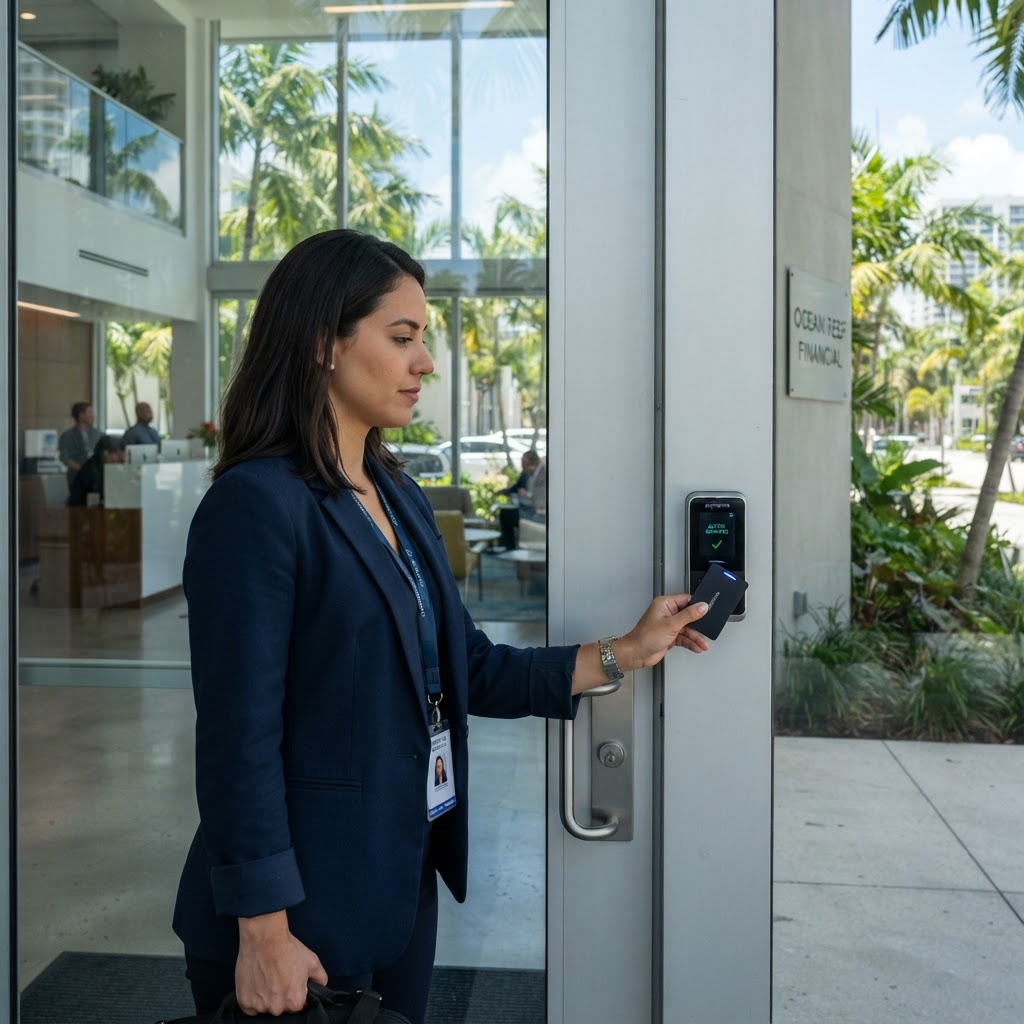
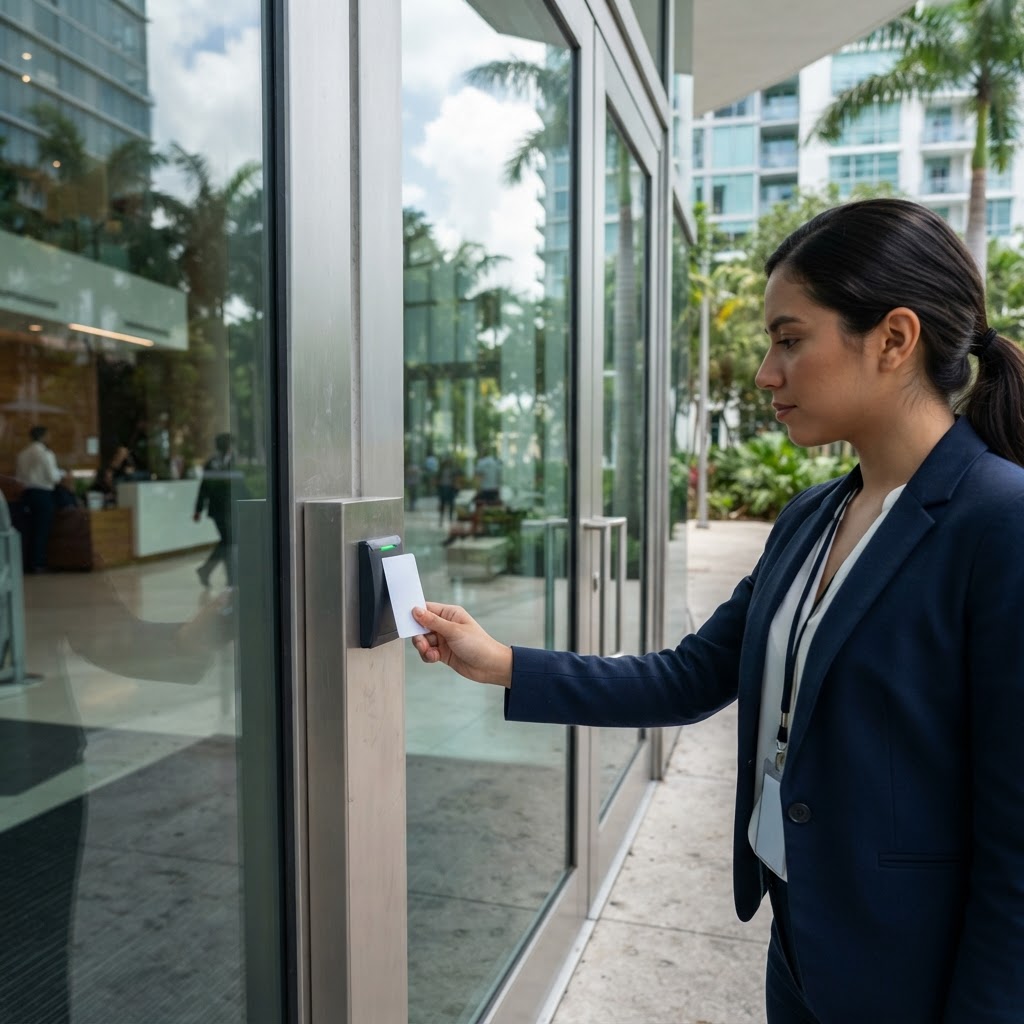
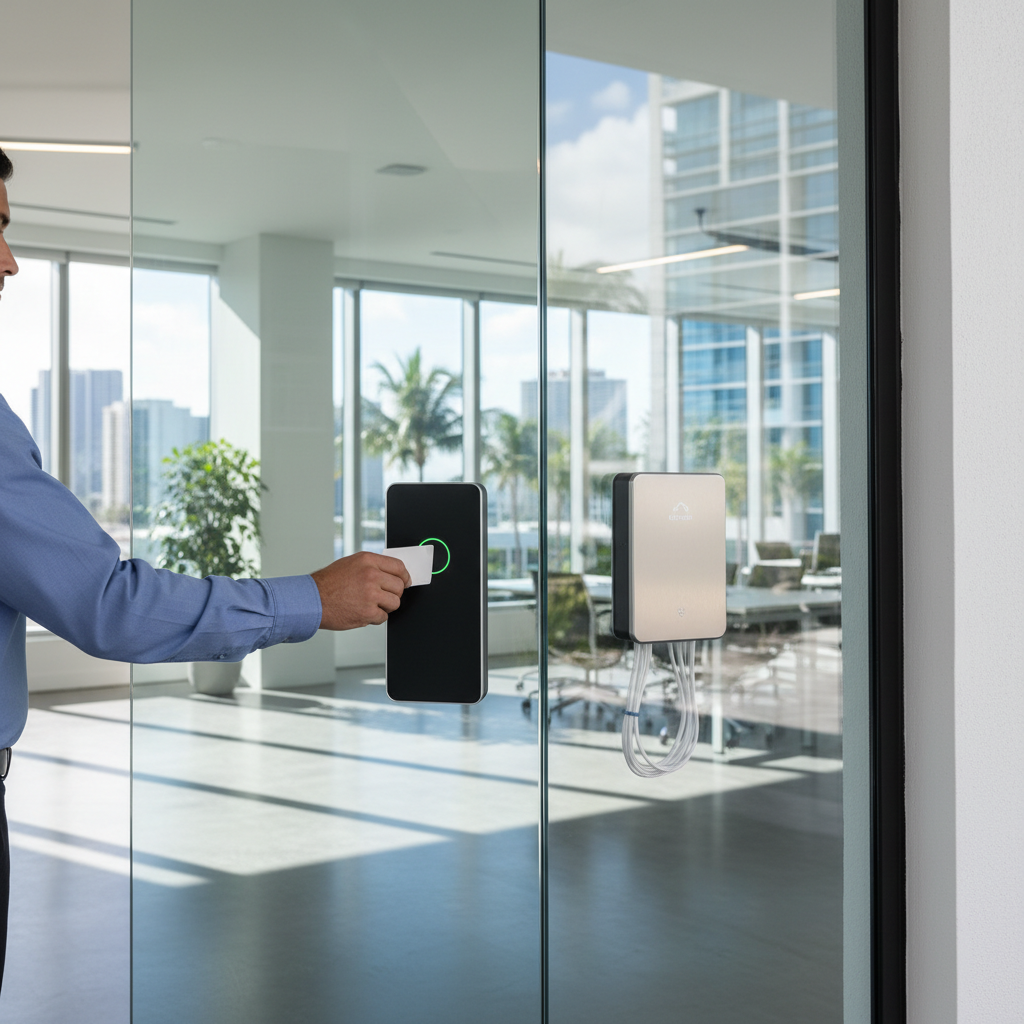
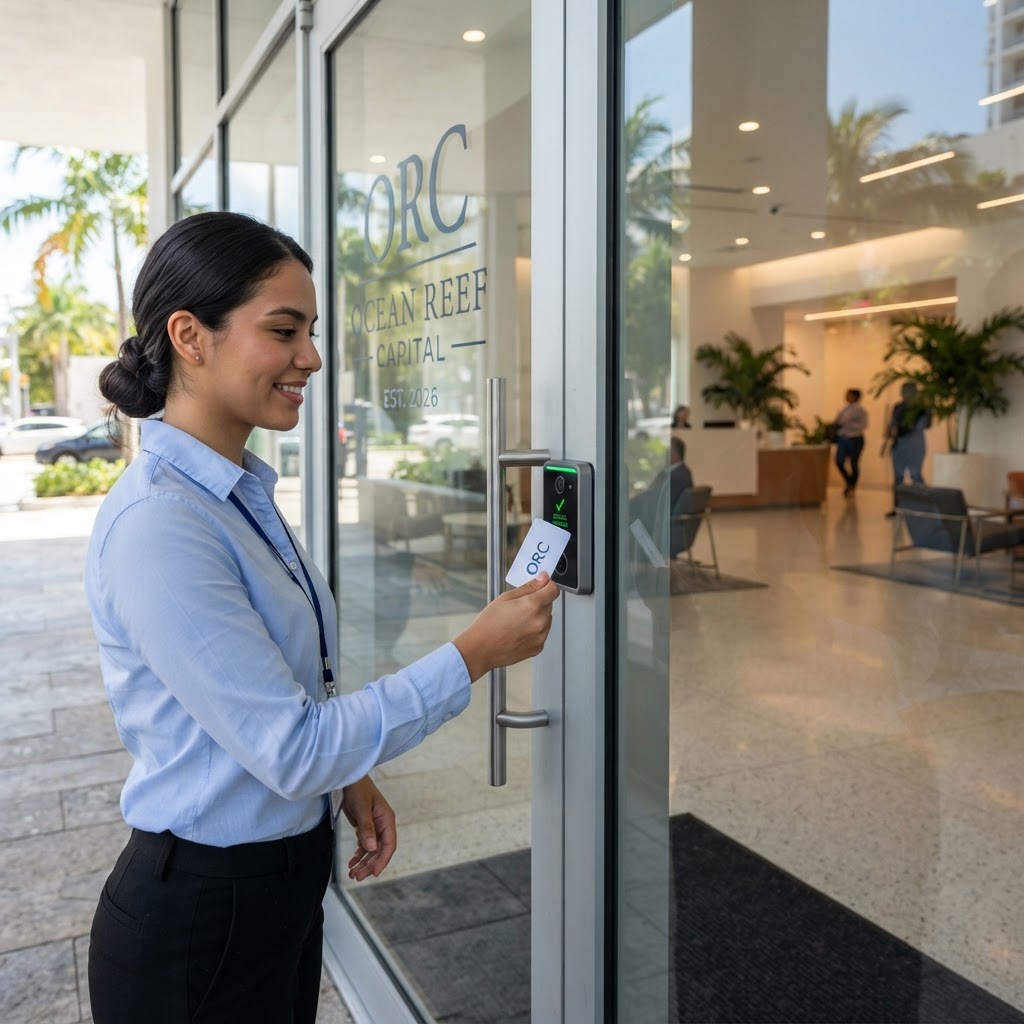
Face recognition entry is a form of biometric access control that uses artificial intelligence to identify individuals by analyzing their facial features. When an employee or visitor approaches an entry point — a door, gate, server room, or reception area — a camera captures their image, compares it against an enrolled database in real time, and either grants or denies access. No card. No PIN. No contact.
Modern systems have advanced well beyond early-generation technology. Today's solutions leverage deep learning models trained on millions of facial data points, achieving accuracy rates that meet or exceed NIST (National Institute of Standards and Technology) benchmark standards. According to NIST's Face Recognition Vendor Testing (FRVT) (opens in a new tab), the best commercial systems now achieve false non-match rates below 0.1% under controlled conditions — meaning the door almost never fails to recognize a valid user.
Why South Florida Businesses Are Adopting Biometric Entry in 2026
South Florida's business environment presents unique access control challenges. From multi-tenant office parks in Doral and Brickell to hospitality venues in Miami Beach and warehouses in Hialeah and Medley, businesses here manage high foot traffic, diverse workforces, and often irregular hours. Traditional credential-based systems create friction — and risk.
Here's why face recognition entry is gaining ground across Miami-Dade, Broward, and Palm Beach counties:
- Credential theft is eliminated. Cards can be cloned; PINs can be shared. Faces cannot be borrowed.
- Contactless operation keeps high-touch surfaces clean — a priority that's stuck since the pandemic.
- Real-time audit trails automatically log who entered, when, and where — no manual sign-in sheets.
- Faster throughput at entry points reduces bottlenecks during shift changes or peak business hours.
- Integration with broader security ecosystems — cameras, alarms, HR systems, and video surveillance — becomes seamless.
- Scalability across multiple locations, from a single office in Coral Gables to a distributed retail chain across the tri-county area.
For South Florida SMBs already investing in managed IT and security infrastructure, face recognition entry is a natural extension of an intelligent, layered security approach.
How Face Recognition Entry Systems Work: The Technical Basics
Understanding the core mechanics helps business owners make informed decisions — and ask the right questions of their technology provider.
1. Enrollment
Each authorized user's facial biometric is captured and converted into a mathematical template (not a photograph). This template is stored in an encrypted database, on-premise or in a secure cloud environment.
2. Verification vs. Identification
- Verification (1:1): The system checks whether the person at the door matches a specific enrolled identity — commonly used with an additional factor like a badge tap.
- Identification (1:N): The system searches the entire enrolled database to find a match — fully hands-free and common in high-security or high-throughput scenarios.
3. Liveness Detection
Leading systems include anti-spoofing liveness detection, which distinguishes a real face from a photograph, mask, or video replay — a critical layer for any serious deployment.
4. Edge vs. Cloud Processing
Some systems process facial data locally on the device (edge computing), reducing latency and keeping sensitive biometric data off external networks. Others use cloud-based AI for more powerful matching. Your choice depends on your privacy posture, network infrastructure, and compliance requirements.
A well-designed network infrastructure is foundational to face recognition entry performance. High-quality PoE cameras, low-latency local networking, and reliable internet connectivity all directly affect system accuracy and response time.
Privacy, Compliance, and Legal Considerations in Florida
Biometric data is sensitive — and businesses deploying face recognition entry need to handle it responsibly. While Florida does not currently have a biometric-specific privacy statute equivalent to Illinois' BIPA, businesses operating in South Florida still face important obligations:
- Employee notification and consent is a best practice and increasingly expected, especially as workforce privacy awareness grows.
- Data storage security must comply with Florida's Information Protection Act (FIPA) and, for businesses handling payment or health data, applicable federal frameworks.
- Vendor due diligence matters — your technology provider should clearly document where biometric templates are stored, how they're encrypted, and what deletion policies apply.
- GDPR considerations apply to businesses with European clients or employees — facial biometric data is classified as a special category of sensitive personal data under GDPR.
According to Gartner's research on biometric authentication (opens in a new tab), organizations that treat privacy by design as a core requirement — rather than an afterthought — achieve significantly higher user adoption and lower regulatory risk.
Working with a managed IT partner who understands both the technology and the compliance landscape is essential. MY IT BRAIN's Business Technology Management services help Miami-area businesses deploy access control solutions that are secure, compliant, and right-sized for your operation.
Integrating Face Recognition Entry with Your Existing Technology Stack
Face recognition entry doesn't live in isolation — it works best as part of an integrated security ecosystem. For South Florida SMBs, that typically means connecting biometric access control with:
- IP Camera / CCTV Systems: Facial recognition events can trigger camera recording, providing a correlated video record of every access event.
- Alarm and Intrusion Systems: Unauthorized access attempts can immediately trigger alerts or lockdowns.
- HR and Payroll Platforms: Time-and-attendance data captured at entry points can sync directly with workforce management software.
- VoIP / Intercom Systems: Visitor management workflows can route video intercom calls through platforms like 3CX for remote door release.
- Cloud Identity Platforms: Microsoft Entra ID (formerly Azure AD) and similar platforms can extend identity governance to physical access, unifying logical and physical security.
For this level of integration to work reliably, your underlying connectivity and internet infrastructure must be robust. Latency, packet loss, or bandwidth constraints at a camera-connected access point can degrade system performance and create false denials — a frustrating experience for employees and a potential liability.
Choosing the Right Face Recognition Entry System for Your Miami Business
Not every solution fits every business. Here's a practical checklist for South Florida SMBs evaluating face recognition entry:
Key Questions to Ask
- Where is biometric data stored, and how is it encrypted?
- Does the system include liveness detection?
- What is the false acceptance rate (FAR) and false rejection rate (FRR)?
- Can it integrate with our existing access control hardware and software?
- Is on-premise processing available for sensitive environments?
- What happens during a network outage — can the system operate offline?
- Does the vendor provide local support in the South Florida area?
Hardware Considerations
Camera quality matters enormously. Look for systems with:
- Near-infrared (NIR) illumination for consistent performance in variable lighting (critical for Miami's mix of bright outdoor light and dim indoor environments)
- Wide-angle lenses for lobby and reception coverage
- IP67 or higher weatherproofing for outdoor installations
- PoE (Power over Ethernet) compatibility to simplify installation on a structured network infrastructure
Total Cost of Ownership
Enterprise-grade face recognition entry hardware typically ranges from $500–$2,500+ per door, with software licensing and cloud fees adding recurring costs. However, when measured against the operational cost of managing physical credentials, responding to lost cards, or investigating unauthorized access incidents, biometric systems often deliver a compelling ROI within 18–24 months for businesses with 20+ employees.
Why Partner with MY IT BRAIN for Face Recognition Entry in South Florida
Deploying face recognition entry isn't a plug-and-play project. It requires careful site assessment, network readiness evaluation, hardware selection, software configuration, user enrollment, and ongoing monitoring. MY IT BRAIN brings deep expertise across all of these layers — from structured cabling and UniFi networking to managed cybersecurity and business technology management.
As a trusted managed IT provider serving businesses across Miami-Dade, Broward, and Palm Beach counties, we design access control solutions that fit your environment, your team, and your compliance requirements — without over-engineering or unnecessary complexity.
Whether you're securing a single office in Doral, a multi-location operation across the tri-county area, or a hospitality venue in Miami Beach, we'll help you implement face recognition entry the right way — the first time.
Ready to Upgrade Your Entry Security?
Face recognition entry is no longer a futuristic concept — it's a proven, deployable technology that South Florida SMBs can implement today. If you're ready to move beyond keycards and PINs and into intelligent, biometric-powered access control, MY IT BRAIN is here to help.
Contact our team at /contact to schedule a free access control consultation. We'll assess your current entry points, discuss your security and compliance goals, and recommend a solution built for your business.
Frequently Asked Questions
Ready to Upgrade Your IT?
Talk to our South Florida IT experts about your business challenges. Free consultation, no commitment.
Get a Free Consultation