The Modern Business Phone System Landscape
The business phone system market has never been more complex — or more opportunity-rich. South Florida businesses have more high-quality VoIP options than ever before, from pure cloud UCaaS platforms to hybrid on-premise/cloud systems that balance features, cost, and control.
This buyer's guide helps Miami and South Florida businesses evaluate options intelligently and avoid common mistakes.
Why VoIP Is Now the Right Choice for Almost Every Business
Traditional PSTN and PRI phone systems still work — but they're being sunset. AT&T and major carriers are phasing out traditional landline infrastructure. The cost premium vs. VoIP is now unjustifiable for most businesses.
VoIP business phone systems deliver:
- 60–80% lower monthly calling costs via SIP trunks
- Unified communications (voice, video, chat, SMS) in one platform
- Remote and mobile capability (desktop and mobile apps)
- Advanced features (IVR, call queues, call recording, analytics)
- Scalability without new hardware
Key Evaluation Criteria
1. Deployment Model
Cloud-hosted (hosted PBX): Vendor manages all hardware in the cloud. Lowest upfront cost, fastest deployment, automatic updates. Best for: most SMBs, multi-location businesses, remote-heavy teams.
On-premise: PBX software or appliance installed at your location. Higher upfront cost, requires IT management, maximum control. Best for: businesses with specific compliance requirements or very high call volumes.
Hybrid: On-premise PBX with cloud failover and cloud features. Best of both worlds for larger organizations.
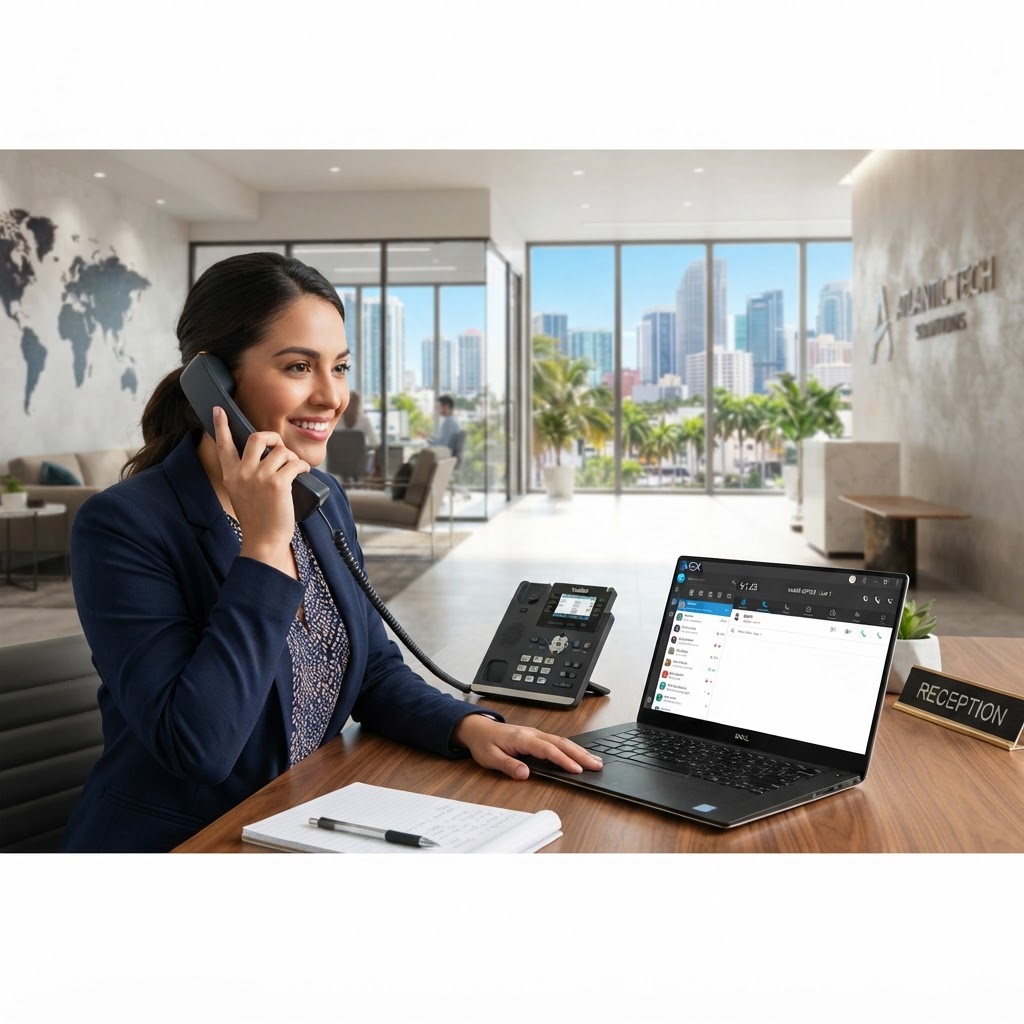
3CX (our recommendation for most Miami SMBs): Software-based PBX that can run on your hardware, in the cloud, or hosted by 3CX. As a 3CX Silver Partner, MY IT BRAIN recommends it for its flexibility, low cost, and feature set.
2. Features Checklist
Core features every business needs:
- [ ] Auto-attendant / IVR (virtual receptionist)
- [ ] Call queues and hold music
- [ ] Extension-to-extension dialing
- [ ] Voicemail to email
- [ ] Mobile app (iOS and Android)
- [ ] Desktop softphone app
- [ ] Call recording (check Florida two-party consent law)
- [ ] Number porting (keep your existing numbers)
Advanced features worth evaluating:
- [ ] Video conferencing
- [ ] Live chat and SMS
- [ ] CRM integration (Salesforce, HubSpot)
- [ ] Call center / wallboard
- [ ] AI receptionist
- [ ] Fax-to-email
3. SIP Trunking and Carrier Selection
Most VoIP systems connect to the PSTN via SIP trunks — your internet phone lines. Choosing the right SIP provider is as important as the PBX:
- Bandwidth.com: Tier 1, excellent quality, recommended
- Twilio: Developer-friendly, usage-based pricing
- Vonage Business: Bundled UCaaS option
- Local carrier SIP: For businesses needing local number inventory
4. Hardware: IP Phones vs. Softphones
Many businesses are eliminating desk phones entirely and using softphone apps on laptops and mobile devices. This works well for:
- Remote and hybrid teams
- Knowledge workers with headsets
- Businesses prioritizing cost
Desk phones remain valuable for:
- Reception desks and high-call-volume roles
- Conference rooms (dedicated speakerphone)
- Employees who prefer physical controls
5. Internet Connectivity Requirements
VoIP quality depends on your internet connection. Each simultaneous call requires ~100 Kbps. More importantly:
- Jitter: VoIP requires low jitter (under 30ms) — a QoS policy on your router is essential
- Packet loss: Even 1% packet loss causes noticeable voice quality issues
- Redundancy: Consider a backup LTE line for failover — VoIP outage = phone outage
The Total Cost of Ownership
For a 20-user Miami business over 3 years:
Traditional PBX (existing):
- Monthly line costs: $600–$1,200/month
- Hardware maintenance: $2,000–$5,000/year
- 3-year total: ~$27,600–$58,800
3CX on Cloud with SIP trunks:
- 3CX license: $585/year (20 users)
- SIP trunks (10 concurrent calls): $100–$150/month
- 3-year total: ~$5,355–$7,155
Savings: $20,000–$50,000 over 3 years.
MY IT BRAIN's VoIP Practice
As a 3CX Silver Partner, we design, install, and support VoIP phone systems for South Florida businesses. Our Business Communications service includes system design, number porting, hardware procurement, installation, training, and ongoing support.
Contact MY IT BRAIN for a free phone system assessment and cost comparison.
Frequently Asked Questions
Ready to Upgrade Your IT?
Talk to our South Florida IT experts about your business challenges. Free consultation, no commitment.
Get a Free Consultation